What Is Advertising? Types, Costs & How It Works in India (2026 Guide)
A complete 2026 guide explaining what advertising is, how it works in India, major advertising types, costs across media channels, and how businesses can choose the right advertising strategy for growth, visibility, and lead generation.
Introduction Advertising in India – A Rapidly Evolving Landscape (2026)
Advertising in India has transformed dramatically over the past decade. What was once dominated by television, newspapers, and outdoor hoardings has now evolved into a dynamic ecosystem powered by digital media, performance marketing, airport branding, OTT platforms, and integrated omnichannel campaigns. With over 800+ million internet users, rising disposable income, and rapid urbanisation, brands in India must compete aggressively for consumer attention.
Today, advertising is not just about visibility — it is about measurable performance, data-driven decisions, and strategic media planning. Businesses must understand where their audience spends time, how they consume content, and which advertising channels deliver the highest return on investment (ROI). This guide provides a clear, analytical understanding of how advertising works in India, the major formats available, cost structures, and how brands can choose the most effective channels in 2026.
What Is Advertising?
Advertising is a paid form of communication used by businesses to promote products, services, or brand messaging to a targeted audience through various media channels. Unlike organic marketing, advertising guarantees exposure because brands pay for placement, reach, and audience targeting.
In modern India, advertising goes beyond simple promotion. It involves strategic audience segmentation, behavioral targeting, creative storytelling, and performance measurement through key performance indicators (KPIs) such as impressions, reach, engagement rate, cost per click (CPC), cost per lead (CPL), and return on ad spend (ROAS).
Advertising functions as both a brand-building and revenue-generating tool. While traditional media focuses heavily on awareness and recall, digital advertising enables precise targeting and measurable outcomes. Successful campaigns typically combine multiple channels to maximize both reach and conversions.
Why Advertising Is Critical for Businesses in India
India is among the fastest-growing advertising markets globally, driven by rapid digital adoption, regional market expansion, and increased competition across industries. With consumers exposed to thousands of messages daily, brands must invest in consistent and strategic advertising to remain visible.
Advertising helps businesses achieve several core objectives:
Brand Awareness: Advertising ensures a brand stays visible in crowded markets. High-frequency exposure increases recall and familiarity.
Lead Generation & Sales: Performance-focused campaigns drive direct conversions through measurable actions such as clicks, inquiries, or purchases.
Market Expansion: Advertising allows brands to enter new geographic regions or demographic segments efficiently.
Brand Positioning: Premium media placements, airport branding, and high-end magazine advertising help businesses position themselves as luxury or authoritative brands.
Competitive Advantage: Consistent advertising ensures brands remain top-of-mind compared to competitors who may rely solely on organic marketing.
Without advertising, growth becomes slower and unpredictable, especially in industries where consumers rely on brand recognition before making purchase decisions.
Major Types of Advertising in India
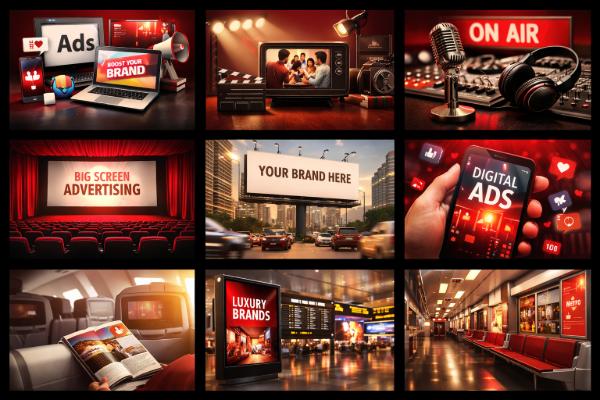
India’s advertising ecosystem consists of multiple channels, each serving different objectives and audience segments.
Digital Advertising
Digital advertising has become the fastest-growing segment in India due to high smartphone penetration and increased online engagement. Platforms include search engines, social media networks, display advertising networks, and video platforms.
Digital advertising allows brands to track KPIs such as click-through rate (CTR), conversion rate, customer acquisition cost (CAC), and ROAS. Campaigns can be optimized in real-time, enabling businesses to scale high-performing ads quickly.
Best suited for lead generation, e-commerce, app installs, and performance-driven campaigns where measurable results are essential.
Television Advertising
Television remains one of the most powerful mass-reach mediums in India, particularly for FMCG brands, political campaigns, and nationwide product launches. Regional television channels provide access to diverse linguistic markets.
Key metrics include gross rating points (GRP), reach percentage, frequency, and cost per thousand impressions (CPM). While TV advertising has higher production and media costs, it delivers strong brand recall and credibility.
Print Advertising
Print media — including newspapers and magazines — continues to be relevant in specific sectors such as government campaigns, real estate, education, and luxury branding. Regional publications allow localized targeting.
Metrics focus on circulation numbers, readership data, ad placement size, and geographic reach. Print advertising is particularly effective for announcements, tenders, and formal communication.
Outdoor Advertising (OOH)
Outdoor advertising includes billboards, transit media, metro branding, and city hoardings. It offers continuous exposure in high-traffic locations, creating strong brand visibility.
KPIs for outdoor campaigns include estimated impressions, traffic volume, dwell time, and visibility index. OOH is ideal for city-wide campaigns and long-term brand recall.
Airport Advertising
Airport advertising targets premium audiences such as business travelers, corporate executives, and high-net-worth individuals. Formats include digital screens, baggage belt branding, boarding gate panels, and airport lounges.
KPIs focus on passenger footfall, dwell time, and premium audience demographics. Airport advertising enhances brand perception and positions businesses as high-end or global brands.
Inflight Magazine Advertising
Inflight magazines offer captive audience exposure during flights, with readers spending extended time engaging with content. Industries such as finance, luxury real estate, hospitality, and lifestyle benefit significantly from this medium.
Metrics include readership estimates, average reading time, and brand recall rates. This format works best for premium branding rather than direct response campaigns.
How Advertising Works: The Strategic Process
Successful advertising campaigns typically follow a structured five-stage process:
1. Strategy Development
Brands define their target audience, campaign objectives, budget allocation, and core messaging. This stage determines whether the campaign focuses on awareness, engagement, or conversions.
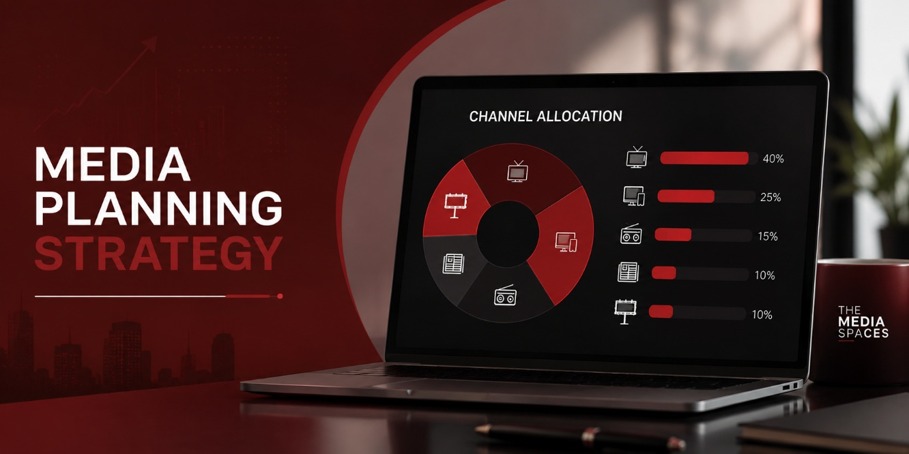
2. Media Planning
Agencies analyze audience behavior and select appropriate channels. Media planners evaluate reach potential, frequency requirements, and cost efficiency across platforms.
3. Creative Development
Creative teams design visuals, videos, ad copy, and messaging aligned with brand positioning. High-quality creative significantly impacts engagement rates and conversion performance.
4. Execution & Deployment
Campaigns are launched across chosen channels with precise scheduling, targeting parameters, and budget distribution.
5. Measurement & Optimization
Campaign performance is monitored using KPIs such as impressions, CTR, CPL, CPA (cost per acquisition), conversion rate, and ROAS. Continuous optimization improves efficiency and reduces wasted spend.
Advertising Costs in India (2026 Market Overview)
Advertising costs vary widely based on platform, targeting complexity, location, and competition level. While digital campaigns may start with modest budgets, premium media such as airports or national television require significant investment.
Typical cost indicators include:
- Search advertising: ₹20 – ₹500+ per click depending on industry competition.
- Social media lead generation: ₹200 – ₹800 per lead on average.
- Newspaper advertising: ₹500 – ₹2,000 per square centimeter.
- Outdoor hoardings: ₹50,000 to ₹10 lakh per month depending on city and visibility.
- Airport advertising: ₹2 lakh to ₹50 lakh+ depending on format and duration.
- Inflight magazine placements: ₹3 lakh to ₹15 lakh per issue.
Brands must analyze cost versus expected reach, conversion potential, and audience quality before allocating budgets.
Key Advertising KPIs Brands Must Track
Modern advertising is driven by measurable performance indicators. Important KPIs include:
- Reach and Impressions for awareness campaigns
- Click-Through Rate (CTR) for engagement
- Cost Per Click (CPC) and Cost Per Lead (CPL) for performance campaigns
- Conversion Rate for sales-driven advertising
- Customer Acquisition Cost (CAC)
- Return on Ad Spend (ROAS)
- Brand Recall and Engagement Metrics
Regular monitoring allows brands to optimize campaigns and improve long-term efficiency.
How to Choose the Right Advertising Channel
Selecting the right advertising medium depends on several factors:
Campaign Objective: Awareness campaigns benefit from TV and outdoor media, while performance campaigns thrive on digital platforms.
Target Audience: Premium audiences respond well to airport and inflight advertising, whereas younger demographics engage more through social media.
Budget Availability: Digital advertising offers flexible entry-level budgets, while mass media requires larger investments.
Geographic Reach: Regional print and local outdoor campaigns work well for city-focused promotions.
Industry Type: Luxury brands may prioritize premium placements, while startups often begin with digital performance marketing.
Most successful campaigns use an integrated media mix rather than relying on a single channel.
Conclusion: Advertising Strategy in India for 2026 and Beyond
Advertising in India is no longer limited to traditional mass media. The rise of digital platforms, advanced analytics, and premium niche channels has created a complex but highly effective marketing ecosystem. Businesses that combine data-driven digital campaigns with strong brand-building channels such as outdoor, television, and airport media achieve the best results.
In 2026, successful advertisers focus on measurable performance, creative storytelling, and strategic channel selection. By understanding audience behavior, tracking relevant KPIs, and continuously optimizing campaigns, brands can maximize visibility, improve ROI, and build long-term market leadership.
Advertising is not just an expense — it is a strategic investment that drives growth, strengthens brand perception, and ensures businesses remain competitive in India’s rapidly evolving marketplace.
Let’s Plan Your Next Advertising Campaign
Ready to grow your brand with strategic media planning and high-impact advertising solutions? Connect with our team to discuss your campaign goals, target audience, and marketing objectives. We’ll help you create a customised advertising strategy designed for maximum reach and ROI.
Email: enquiry@themediaspaces.com